
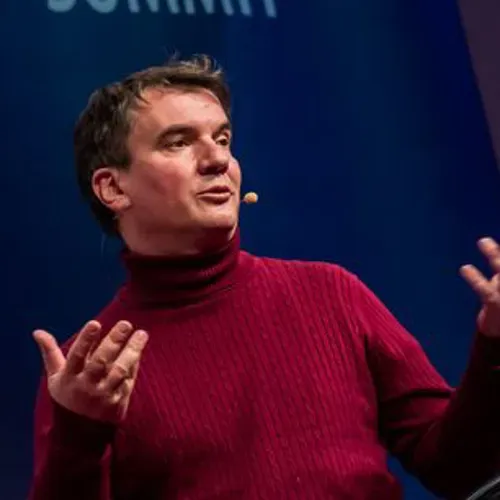
At many industry gatherings, the people in the room look rather like each other. They run the same kind of business, read the same trade press and worry about the same competitors. The Human2Human Summit was built on a different premise. On 15 January 2026, the Al Multaqua Ballroom at Dubai World Trade Centre brought together senior leaders from exhibitions, large events and conferences, venues and visitor attractions for one day and nine sessions of content and conversation.
One slide from the day captured the idea in a single picture: a Venn diagram with B2B exhibitions, large events and visitor attractions as three circles, overlapping on experience, emotions and engagement. That overlap is what this article is about.
The mix on stage
Look at the organisations behind the 2026 speakers: dmg events, Aquaventure World at Atlantis Dubai, Dubai World Trade Centre, Messe Frankfurt Middle East and SDA Bocconi School of Management, with GRS Research & Strategy as host. Add a speaker from festivals and live events, and the line-up spans exhibitions, a visitor attraction, a venue, a business school and the festival world. It is not a line-up you see often.
As we see it, the point is not novelty. It is that these sectors share an audience. The family spending a Saturday at an attraction may well include the buyer who walks a show floor on Tuesday. Our guess is that they bring the same expectations, the same phones and the same limited patience to both.
Six questions worth comparing
None of what follows describes a particular company. These are the kinds of questions an attraction operator and an exhibition organiser could each bring to the same table, and answer differently.
1. Where does the experience actually begin?
For an attraction, the day may start in the car park or the queue. For a trade show, it may start at registration, or in an inbox weeks earlier. Who owns those first few minutes, and are they designed or simply endured?
2. What brings people back?
An attraction relies on repeat visits and recommendations. An exhibition relies on exhibitors rebooking and visitors returning. Is loyalty earned the same way in both, through a memory worth repeating, or does a business visitor need a harder kind of return?
3. What do next-generation audiences expect?
Next-generation audiences were a keynote theme in 2026. A younger guest at a theme park and a younger delegate at a conference may share more habits than either sector assumes. Which expectations, around flexibility, personalisation and moments worth sharing, carry across intact?
4. Where should technology step in, and where should it step back?
One line from the day summed up five principles for using AI in live experiences:
AI cleans the path, humans walk it.
On our reading, ticketing, crowd flow, matchmaking and wayfinding look like the path. The welcome, the host and the unplanned conversation look like the walk. Does that line fall in the same place for an attraction as it does for a show organiser?
5. What is worth paying more for?
Exhibitor satisfaction data from 2017 to 2024, presented at the summit, showed sentiment improving after COVID, with in-person experience positioned as a premium product. Fast-track and premium access are familiar ideas in leisure. Is there a show-floor equivalent that adds value rather than friction, and where would it feel wrong in a business setting?
6. Content or margin?
The growth story of ADIPEC, shared on the day, described a show that grew to 239,000 visitors by investing in content rather than margin. What is the equivalent choice for an attraction: a new experience, or a higher ticket price? And how does a leadership team know when reinvestment is paying off?
Why we think the comparison works
Our view is that the value lies in the differences. Each sector has solved problems the others may still be working through. Attractions tend to design around emotion, flow and the whole day. Exhibitions tend to design around outcomes, relationships and a short, intense visit. Venues see both from the inside, and a business school can offer frameworks for comparing them honestly.
This is the idea at the heart of H2H: as the world becomes more digital, face-to-face experience becomes more valuable, not less. The organisers call human connection "the ultimate currency". If that holds, then every sector that trades in it has a stake in how the others spend it, and something to learn from watching.
Four of the six questions, side by side:
| Shared question | Attraction lens | Exhibition lens |
|---|---|---|
| First impressions | Arrival, queue, entry | Registration, badge, first aisle |
| Coming back | Repeat visits | Rebooking and return visits |
| Technology | Smoother flow | Better matchmaking |
| Premium | Access and comfort | Quality of meetings |
Join the conversation
Which of these six questions is live in your business right now, and who outside your sector might already have an answer?
- Find a peer from a different sector through Connect and compare notes.
- See the ways members contribute on Get involved, including helping shape future themes.
- Revisit the day in The Summit recap, or ask Amal anything about H2H.
- Follow plans for Dubai 2027 on What's next.